End of an era in Indian democracy, Why Delhi Police banned protests at iconic Jantar Mantar Road!
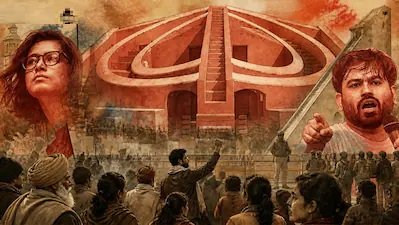
For decades, Jantar Mantar Road in the heart of New Delhi served as the iconic epicenter of public dissent, echoing with chants of peaceful movements, political rallies, and intense demonstrations. Named after the famed 18th-century astronomical observatory located along the stretch, this historic road became deeply intertwined with India’s democratic fabric. Beyond its political resonance, the area carries a rich architectural and historical legacy spanning over three centuries.
Flanked by charming British-era bungalows, the heritage zone is anchored by the observatory preserved by the Archaeological Survey of India (ASI). In a landmark decision, Delhi Police Commissioner Anurag Kumar issued a permanent order on October 11, officially removing Jantar Mantar Road from the list of designated protest venues. To accommodate public gatherings and demonstrations, the police administration has designated Ramlila Maidan, Burari Ground, and the CBD Ground in East Delhi as the three official alternative protest sites.
Jantar Mantar emerged as the premier choice for public demonstrations in 1993, following strict bans on rallies near the lawns of Boat Club by India Gate. The site gets its name from the astronomical observatory commissioned in 1724 by Maharaja Sawai Jai Singh II of Jaipur. Renowned for its scientific excellence and engineering mastery, the complex houses incredible masonry instruments like the Samrat Yantra (a massive sundial), Jaiprakash Yantra, Ram Yantra, and Mishra Yantra, built meticulously using brick, rubble, and lime plaster to calculate astronomical movements with precision.
Apart from its scientific significance, Jantar Mantar Road holds immense political history. The heritage bungalow at 7, Jantar Mantar Road served as the headquarters of the Indian National Congress (INC) in the post-independence era and currently houses a library managed by a public trust. Having stood as a quiet witness to countless hunger strikes, historical rallies, and socio-political movements over the decades, Jantar Mantar Road now transitions away from being a chaotic protest hub into a preserved historical monument and tourist landmark.

- Megha
- Stop Aging Now! The Ultimate Skincare Mistake Everyone Makes With Sunscreen October 26, 2026
- Rare Planetary Alignment! Check Which Signs Are Destined for Wealth and Career Growth October 26, 2026
- Screamer or Shocking Error? Padikkal Robbed of Double Century on 199 via Controversial Call! October 26, 2026
- Are Children Safe Inside? Alarming Surge in Student Abuse Exposes Deep-Seated Crisis October 26, 2026
- Civic Polls Alliance Rumors Ignited! What Really Happened at Sudip Banerjee’s Residence? October 26, 2026