Why Gundicha Marjana is So Crucial Before Ratha Yatra! Discover the Deep Spiritual Teachings of Sri Chaitanya Mahaprabhu
Sumanta Rudra
Dean, Bhakti Vedanta Research Center
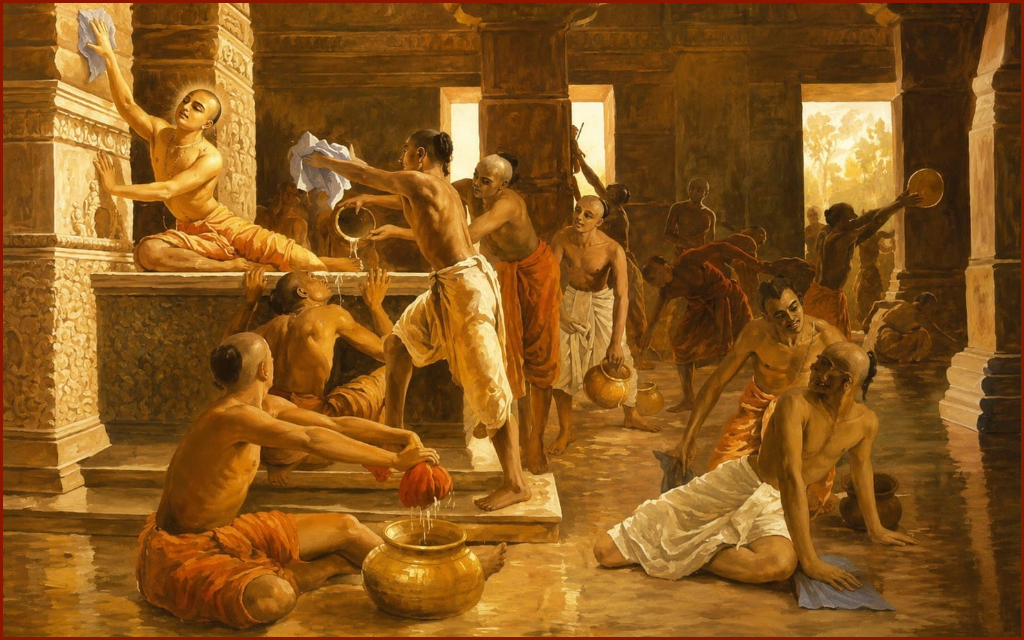
Just a day before the grand festival of Ratha Yatra, a unique ritual named ‘Gundicha Marjana’ is observed with immense devotion and faith in Puri’s Sri Jagannatha Dhama. While it outwardly appears to be a simple temple cleaning festival, it carries a profound spiritual and psychological significance at its core. According to Sri Chaitanya-charitamrita, Sri Chaitanya Mahaprabhu Himself, accompanied by hundreds of devotees, cleaned the Gundicha Temple with His own hands—the very place where Lord Jagannatha resides after the chariot festival.
Cleansing the Gundicha Temple and the Teachings of Mahaprabhu
The founder-acharya of ISKCON, His Divine Grace A.C. Bhaktivedanta Swami Prabhupada, notes in his commentary that the Gundicha Temple, located about two miles away from the main Jagannatha Temple, is the ultimate destination of the Ratha Yatra. Lord Jagannatha travels there aboard His chariot, stays for a few days, and then returns to the main temple. However, prior to the Lord’s arrival, Mahaprabhu ensured that every single corner of the temple was meticulously cleaned.
According to the descriptions in Sri Chaitanya-charitamrita, Mahaprabhu cleaned the temple using a broom and water with His own hands. He collected straws, dust, and debris into large piles and personally inspected the work of every single devotee. To ensure no shortcomings remained, He even had the temple cleaned a second time so that not even the smallest speck of dust was left behind. Through this pastime, He taught that spiritual life is not merely about external behavior; it is a process of deep internal purification.
Purification of the Heart-Temple and ‘Ceto-Darpana-Marjanam’
Srila Prabhupada explains that the Gundicha Temple is a symbol of the devotee’s heart. Just as the temple needs to be spotless for the arrival of Lord Jagannatha, one must free their heart from all anarthas (unwanted desires) to enthrone Sri Krishna within.
- First stage (gross debris): This represents the worldly desires for material enjoyment, material attachments, and selfish inclinations within a human being.
- Second stage (fine dust particles): This symbolizes pride, hypocrisy, the desire for prestige, and subtle ego lurking in the human subconscious mind.
This teaching is intimately connected to the very first verse of Mahaprabhu’s famous Siksastakam—”ceto-darpana-marjanam“, meaning the cleansing of the mirror of the heart. According to Gaudiya Vaishnava philosophy, the primary means for this purification is dedicated devotional service, particularly the congregational chanting of the holy names (Harinama-sankirtana). Chanting the holy names of the Lord wipes away the accumulation of material contamination gathered over countless lifetimes and makes the heart fit for God-consciousness.
Relevance of Gundicha Marjana in Modern Life
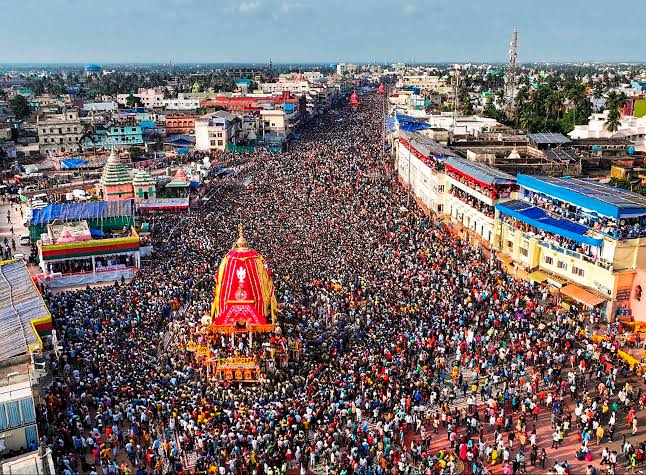
That historic event in 16th-century Puri remains just as relevant to modern human life today. In this contemporary age, people run relentlessly after external growth, financial success, and social prestige. However, true peace cannot be achieved unless inner restlessness, envy, dissatisfaction, and pride are removed. Mahaprabhu’s Gundicha Marjana reminds us that genuine change and peace always begin from within.
When the dust of pride, selfishness, envy, and material attachment is wiped away through devotion and Harinama, a person’s heart transforms into a suitable abode for Sri Krishna. In that sense, Ratha Yatra is not just the forward march of a chariot on the streets of Puri; it is a supreme call to prepare the temple of our heart for the Lord.

- Admin
- Why Gundicha Marjana is So Crucial Before Ratha Yatra! Discover the Deep Spiritual Teachings of Sri Chaitanya Mahaprabhu June 14, 2026
- India Logs Robust 7.7 Percent GDP Growth for FY26 as PM Modi Hails Economic Resilience June 6, 2026
- 'UP's Trial Applied in Bengal'! Akhilesh Yadav Slams BJP After Meeting Mamata May 7, 2026
- Who will lead Kerala? Venugopal and Chennithala meet Sonia Gandhi as race intensifies May 7, 2026
- Why not fraud in EVM if smart meters can be rigged! Akhilesh Yadav launches scathing attack on BJP May 3, 2026