The Great Battle of 2026: Why Winning Bengal is Tougher than UP or Bihar? Discover 5 Key Factors!
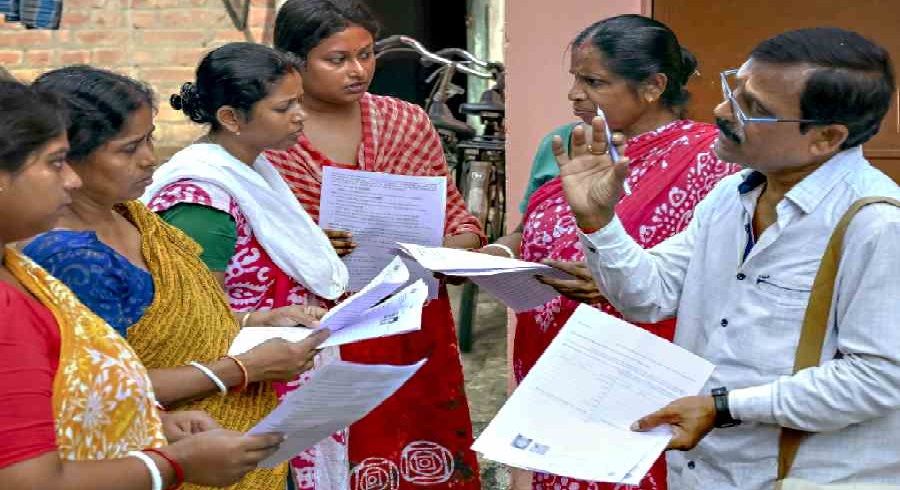
West Bengal has always occupied a distinct and exceptional position on India’s democratic map. While states like Uttar Pradesh or Bihar often witness electoral battles dictated by complex caste equations, the political landscape in Bengal operates on entirely different dynamics. As the 2026 Assembly Elections approach, the central question resonates: Why is the Bengal election so vastly different from the rest of the country? Analysts point to five pivotal reasons that define this unique political theater.
1. The Culture of Political Violence: Unlike other states where electoral disturbances are sporadic, Bengal has a long-standing history of systemic political violence. According to NCRB data, Bengal consistently tops the charts for poll-related and post-poll violence. The struggle here is not merely ideological; it is a primal battle for ‘territorial dominance’ or “Elaka Dokhol,” where political survival often depends on physical control over the booth.
2. Sharp Polarization and the ‘Insider-Outsider’ Debate: Religious polarization has reached unprecedented levels in recent years. The clash between the ruling party’s efforts to consolidate the ‘minority vote bank’ and the opposition’s aggressive ‘Hindutva’ narrative often overshadows core civic issues. Furthermore, the emotive debate of ‘Bohiragoto’ (Outsiders) versus ‘Bhumiputra’ (Son of the Soil) adds a layer of regional pride that is seldom seen in northern states.
3. Cadre-Based ‘Party Society’: Since the Left era, Bengal has evolved into a ‘Party Society’ where politics permeates every aspect of social life. From neighborhood tea stalls to local clubs, everything is viewed through a political lens. This deep-rooted organizational network at the grassroots level is unparalleled in India, except perhaps in Kerala or Tripura.
4. Stringent Election Commission Monitoring: Due to its volatile history, the Election Commission of India treats West Bengal with extra sensitivity. The 2026 elections are expected to be held in multiple phases with an unprecedented deployment of central paramilitary forces, effectively turning the state election into a ‘Mini General Election.’
5. Development vs. Corruption Standoff: The ultimate conflict lies between welfare schemes and corruption allegations. On one hand, schemes like ‘Lakshmir Bhandar’ or ‘Sabuuj Sathi’ provide a direct safety net to millions; on the other, allegations of recruitment scams and illegal mining provide significant ammunition to the opposition. Unlike other states where a single ‘Wave’ often dictates the outcome, Bengal is a confluence of multiple undercurrents. The 2026 “Mahayudh” is not just about forming a government; it is a battle for the soul and political existence of West Bengal.

- Author
- 'Are You Planning to Kill Me Again?' Mamata’s Explosive Claim at Manbazar Rally March 29, 2026
- Mann Ki Baat: Amid Middle East Turmoil, PM Modi Assures Safety of Indians; Thanks Gulf Nations March 29, 2026
- Anubrata Returns as Birbhum's Boss! Abhishek’s 'Secret Order' Leaked by Minister Chandranath March 29, 2026
- Congress Unveils Power-Packed Candidate List for Bengal! Heavyweights to Take the Lead March 29, 2026
- Chepauk-Thiruvallikeni: The 'Bhawanipore' of the South? High-Stakes Battle Grips Chennai! March 29, 2026