Showdown in Lok Sabha: Congress Files Notice Against Speaker, Sambit Patra Slams ‘Political Intent’
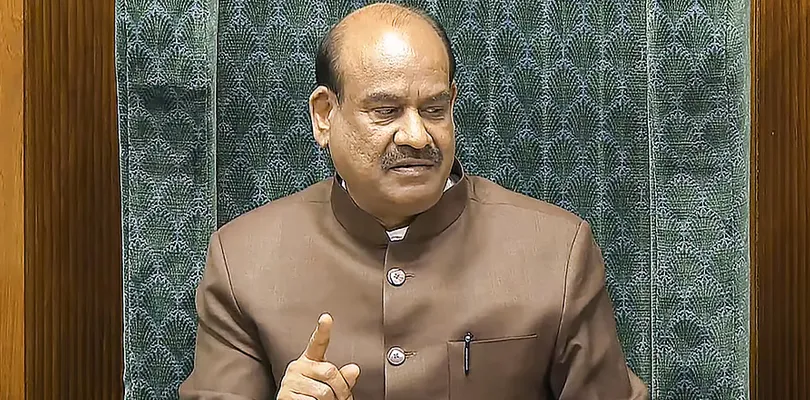
The political temperature in the national capital soared on Tuesday as the opposition bloc officially moved a no-confidence motion against Lok Sabha Speaker Om Birla. Congress Chief Whip K. Suresh submitted the formal notice to the Lok Sabha Secretariat. Following the submission, sources indicate that Speaker Birla has directed Secretary General Utpal Kumar Singh to examine the legal and procedural validity of the notice.
According to preliminary reports, the notice bears the signatures of approximately 120 MPs from major opposition parties, including the Congress, DMK, and Samajwadi Party. However, a significant twist emerged as the Trinamool Congress (TMC) skipped the signing process. Abhishek Banerjee, the TMC’s leader in the Lok Sabha, clarified that while they do not have any ideological disagreement with the move, they believe a joint statement from the ‘INDIA’ bloc should have preceded the notice. The lack of prior consensus is cited as the primary reason for TMC’s tactical distance.
The opposition’s grievances center on allegations of bias. They claim that during the discussion on the Motion of Thanks to the President’s Address, key leaders like Rahul Gandhi were not given adequate time to speak. Furthermore, the suspension of eight MPs has been termed “undemocratic” by the opposition front. They argue that the Speaker’s role has become partisan, necessitating his removal.
Predictably, the BJP has hit back hard. Spokesperson Sambit Patra labeled the move “politically motivated,” stating that the opposition is attempting to undermine constitutional offices for narrow gains. Constitutionally, under Article 94(c), a Speaker can only be removed if a resolution is passed by a majority of all the then members of the House. A mandatory 14-day notice period is required, during which the Speaker typically does not preside over the sessions. While the numbers seem to favor the ruling NDA, this move marks a significant escalation in the ongoing executive-legislature friction.

- Author
- Pashupatinath to Baidyanath Dham! 250 KM High-Speed Corridor to Boost Connectivity in Bihar February 11, 2026
- Never Start Your Car with the AC On! Avoid This Mistake to Save Up to ₹30,000 February 11, 2026
- Direct Cash Transfer of ₹1200 Monthly! Rajasthan Budget 2026 Brings Major Relief for These Families February 11, 2026
- Bullet Speed for Eicher Motors! Jefferies Sets ₹8,800 Target Post Blockbuster Q3 Results February 11, 2026
- "Epstein Called Me Two-Faced!" Hardeep Puri’s Savage Reply to Rahul Gandhi Shakes Parliament February 11, 2026