170 Years on Riverbank Sands! The Hidden Science Behind Dakshineswar Temple’s Durability
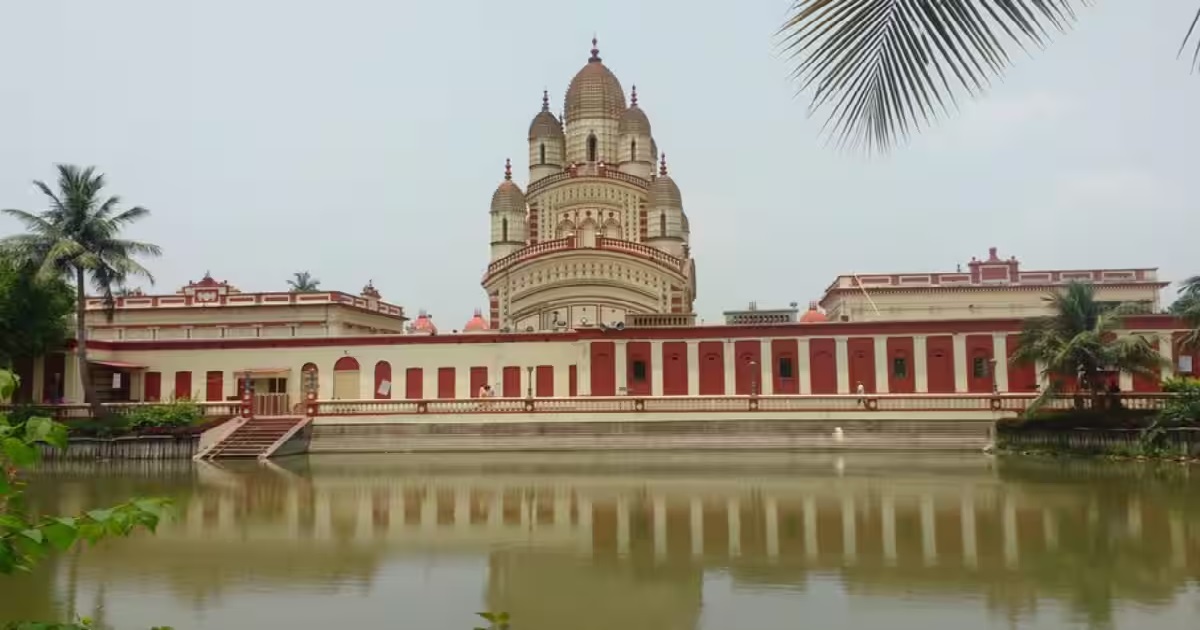
Standing majestically on the eastern bank of the Hooghly River since 1855, the Dakshineswar Kali Temple is more than just a spiritual landmark; it is a masterclass in ancient engineering. For 170 years, this massive structure has remained unshaken despite being built on the treacherous, sandy soil of the riverbank.
The Secret of the Foundation Building a heavy stone-and-brick structure on soft alluvial soil was considered nearly impossible in the 19th century. However, the architects employed by Rani Rashmoni used a sophisticated “Well Foundation” technique. Deep brick pillars were sunk into the earth to reach stable layers, acting like anchors that prevent the building from tilting or sinking due to the river’s proximity.
An Ancient “Super-Glue” In an era before Portland cement, the temple was constructed using a traditional mix of lime, burnt brick dust (surki), molasses, and certain organic binders. This concoction creates a chemical bond that hardens over centuries, making the walls incredibly resistant to moisture and erosion. The massive 100-foot high temple has weathered countless cyclones and floods without a single structural crack.
The Navaratna Architecture Designed in the traditional Bengali ‘Navaratna’ (nine-spires) style, the temple features three tiers. The distribution of weight across these tiers is mathematically precise, ensuring that the pressure on the ground is evenly spread. It took eight years and an estimated 9 lakh rupees—a fortune at the time—to complete this monumental task.
While millions flock here to seek the blessings of Goddess Bhavatarini and remember the legacy of Sri Ramakrishna, the temple remains a subject of awe for modern engineers. It stands as a testament to the fact that ancient wisdom and visionary planning can create icons that defy time itself.

- Author
- R. Madhavan Tenders Apology to Sikh Community Over ‘Dhurandhar 2’ Controversy! Here’s What Happened March 24, 2026
- Mamata Banerjee Resigns from Multiple Govt Posts Ahead of Polls! Here’s Why March 24, 2026
- ‘Stop Being an Impact Player, Hang Up Your Gloves!’ Ex-Cricketer’s Brutal Advice to Dhoni March 24, 2026
- Beyond Finishing: Is Rinku Singh Set to Join KKR’s Leadership Core for IPL 2026? March 24, 2026
- Secure Your Daughter’s Future! Top 8 Investment Schemes Every Parent Must Know March 24, 2026